The Dog Walk Outfit Detail That Prevents Leash Tangle With Multiple Dogs

Quick Answer: Leash tangling with multiple dogs happens most often when leashes are held loosely at inconsistent lengths in one hand - using a leash coupler, or holding each leash at a fixed, separate length with distinct hand positions, prevents most tangling before it starts. The outfit detail that helps most is choosing pants or a jacket with a secure pocket for treats and poop bags, freeing both hands to manage leashes properly.
Leash tangling with two dogs usually isn’t about the dogs’ behavior - it’s about how the leashes are being held, and one small outfit and gear adjustment fixes most of it.
Why does leash tangling happen more with multiple dogs specifically?
Each dog moves somewhat independently, crossing paths, circling, or changing pace, and when leashes are held loosely together in one hand without a fixed structure, the natural movement of two dogs creates crossing and looping that leads to tangles. This isn’t really about dog behavior needing correction - it’s a mechanical problem with how the leashes themselves are being managed relative to each other.
Free hands matter more than people realize here - if one hand is occupied holding a phone, a coffee, or fumbling for a treat pouch, the remaining hand often can’t maintain the separate, consistent leash positions needed to prevent tangling.
What’s the actual fix - is it gear, technique, or both?
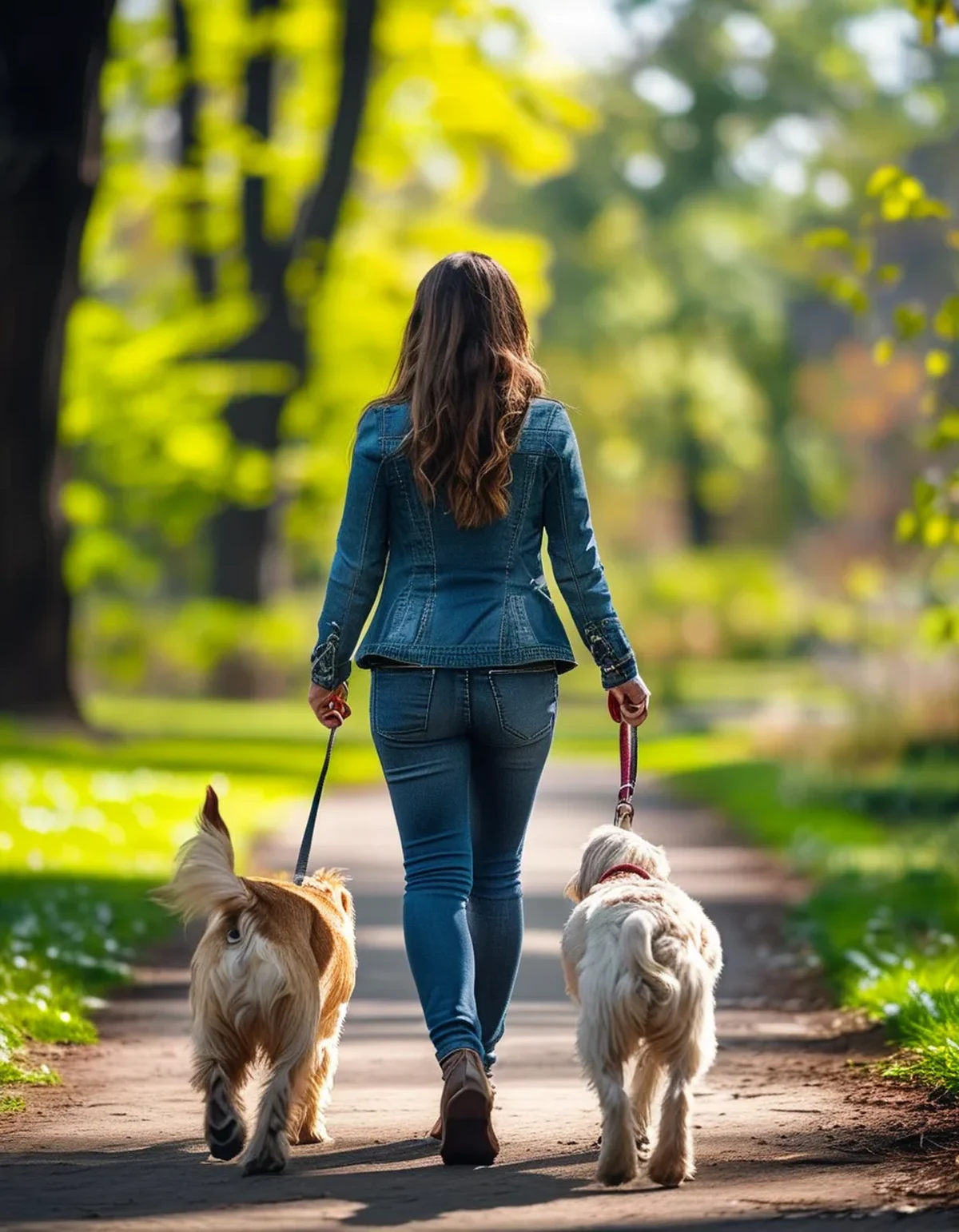
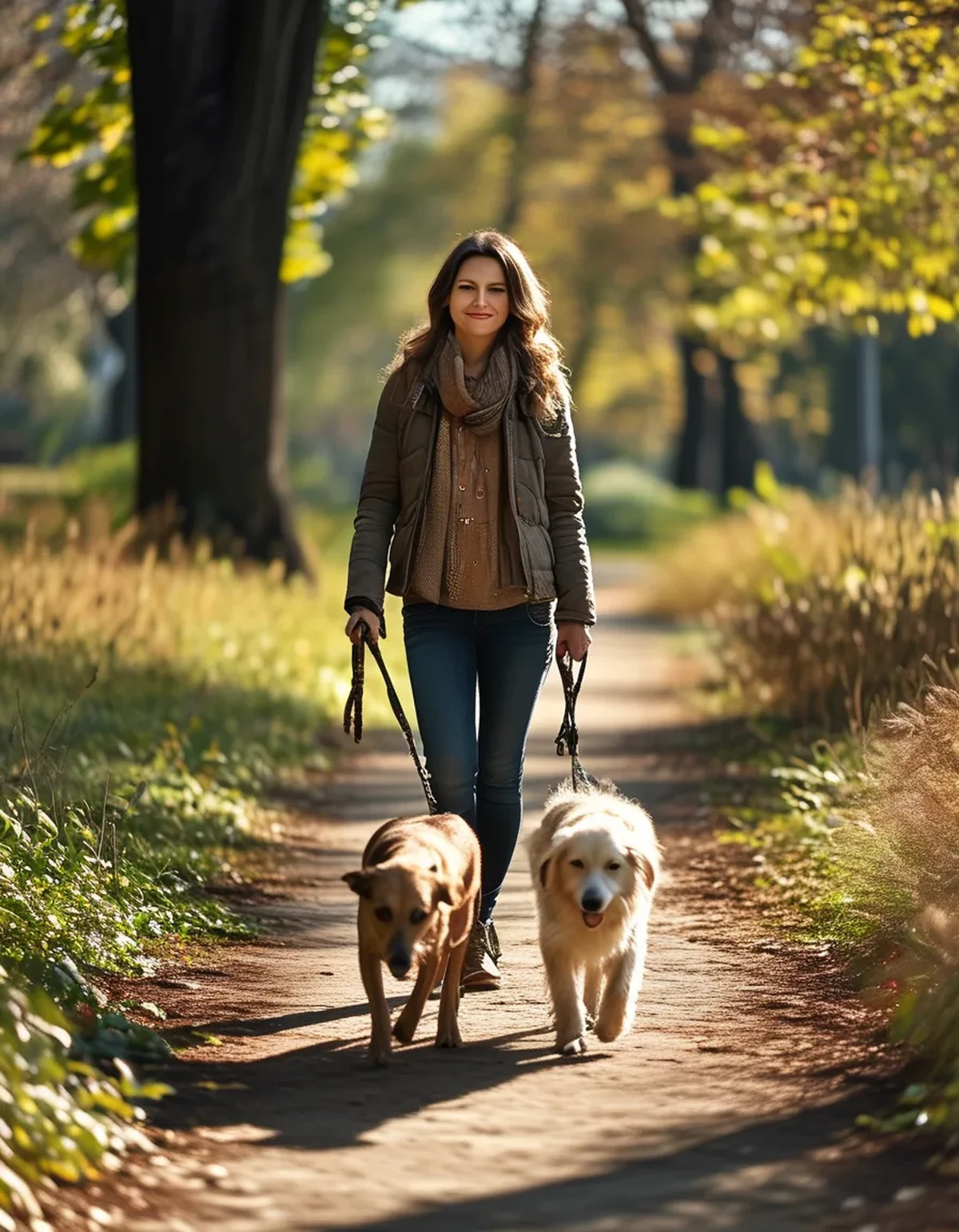
A leash coupler (connecting both dogs to a single leash line) eliminates most tangling by design, since the dogs are physically prevented from crossing paths in a way that creates a loop. For handlers who prefer separate leashes for individual control, holding one leash in each hand rather than both in one prevents the crossing-and-looping pattern that causes most tangles.
The outfit piece that supports this: pants or a jacket with a secure zip pocket for treats, poop bags, and your phone means both hands stay free specifically for leash management, rather than one hand being tied up holding items that should be in a pocket.
What Nobody Tells You About Multi-Dog Walking Gear
Here’s the detail most dog-walking style content skips: a crossbody bag, rather than a hand-carried bag, matters more for multiple-dog walks than single-dog walks specifically, since a hand-carried bag effectively removes one hand from leash management the same way holding a phone or coffee does. A crossbody or waist bag keeps both hands available at all times, which single-dog walking is more forgiving about.
The other overlooked detail: layering pieces with easily accessible pockets (rather than pockets under a zipped coat) matter more for multi-dog walks, since a sudden need for a treat or bag mid-walk, while managing two sets of leash tension, needs to be quick and one-handed - fumbling with a zipped inner pocket while holding two leashes is a common frustration point.
Does leash length itself matter for preventing tangles with multiple dogs?
Yes - using leashes of noticeably different lengths for each dog (one 4-foot, one 6-foot, for instance) reduces the likelihood that both dogs end up in the same physical space at the same time, which is when most tangling actually occurs. Matching leash lengths, ironically, increases tangle risk since both dogs have equal reach to cross into the same area.
This is a low-cost gear adjustment that pairs well with either the coupler or separate-hand technique, and it’s worth trying regardless of which leash-holding method you use.
FAQ: Multi-Dog Walk Outfit and Gear Questions, Answered
Do leash couplers work for dogs of very different sizes or walking paces?
They can, though a significant size or pace mismatch sometimes makes a coupler less comfortable for the smaller or slower dog - separate leashes with the different-length technique may work better in that specific case.
Is a hands-free leash system a good alternative to a crossbody bag?
Yes, hands-free waist-attached leash systems work well for many walkers, though they require both dogs to be reasonably leash-trained, since sudden strong pulls are harder to manage without a hand directly on the leash.
Does this leash and outfit advice change much for walking three or more dogs?
The same principles apply but become more important with each additional dog - free hands, differentiated leash lengths, and easily accessible pockets matter even more as the number of dogs and potential tangle points increases.
TL;DR:
- Leash tangling with multiple dogs is mostly a mechanical problem, not a dog behavior issue
- A coupler or one-leash-per-hand technique prevents most tangling by design
- A crossbody or waist bag keeps both hands free for leash management specifically
- Using different leash lengths for each dog reduces how often they end up in the same space
The outfit and gear choice that matters most for multi-dog walks isn’t about style - it’s about keeping both hands genuinely free to manage leashes.
Keep Reading
This article is for general informational and styling purposes only. Fit, sizing, and product availability may vary.