The Dog Walk Outfit for the First Cool Mornings

Quick Answer: Build three layers you can shed in sequence without carrying anything: a fitted base, a mid layer that ties at the waist, and a light shell only if there is a chance of rain. Full-length bottoms, a real pocket for waste bags and phone, and shoes with tread that handles wet grass. The first cool mornings are wetter than they are cold, and that catches people out more than temperature does.
The six-week window from late August through September is the hardest dressing problem of the dog-walking year, because the same walk feels different at 6:30am and 9am.
What actually changes in late August mornings?
The temperature swing, and more importantly the moisture.
The overnight low drops before the daytime high does. Through late August, mornings routinely fall into the low 60s while afternoons still hit the low 80s. That is a twenty-degree spread within the same day, and a morning walk sits at the cold end of it.
Dew arrives. This is the change people underestimate. Cooler nights mean grass is genuinely wet at 7am in a way it simply was not in July. Ankles, shoe uppers, and the bottom six inches of any legging get soaked, and a wet ankle at 62°F is uncomfortable for the entire walk.
It gets dark later in the morning. Sunrise moves back by roughly a minute a day. A 6:15am walk that was in full light in early August is in half-light by mid-September, which makes visibility a real consideration rather than a theoretical one.
The dog is more energetic. Cooler air means most dogs walk faster and pull more, which changes what your outfit needs to tolerate.
What is the right layering order?
Three layers, each one removable without needing your hands free for long.
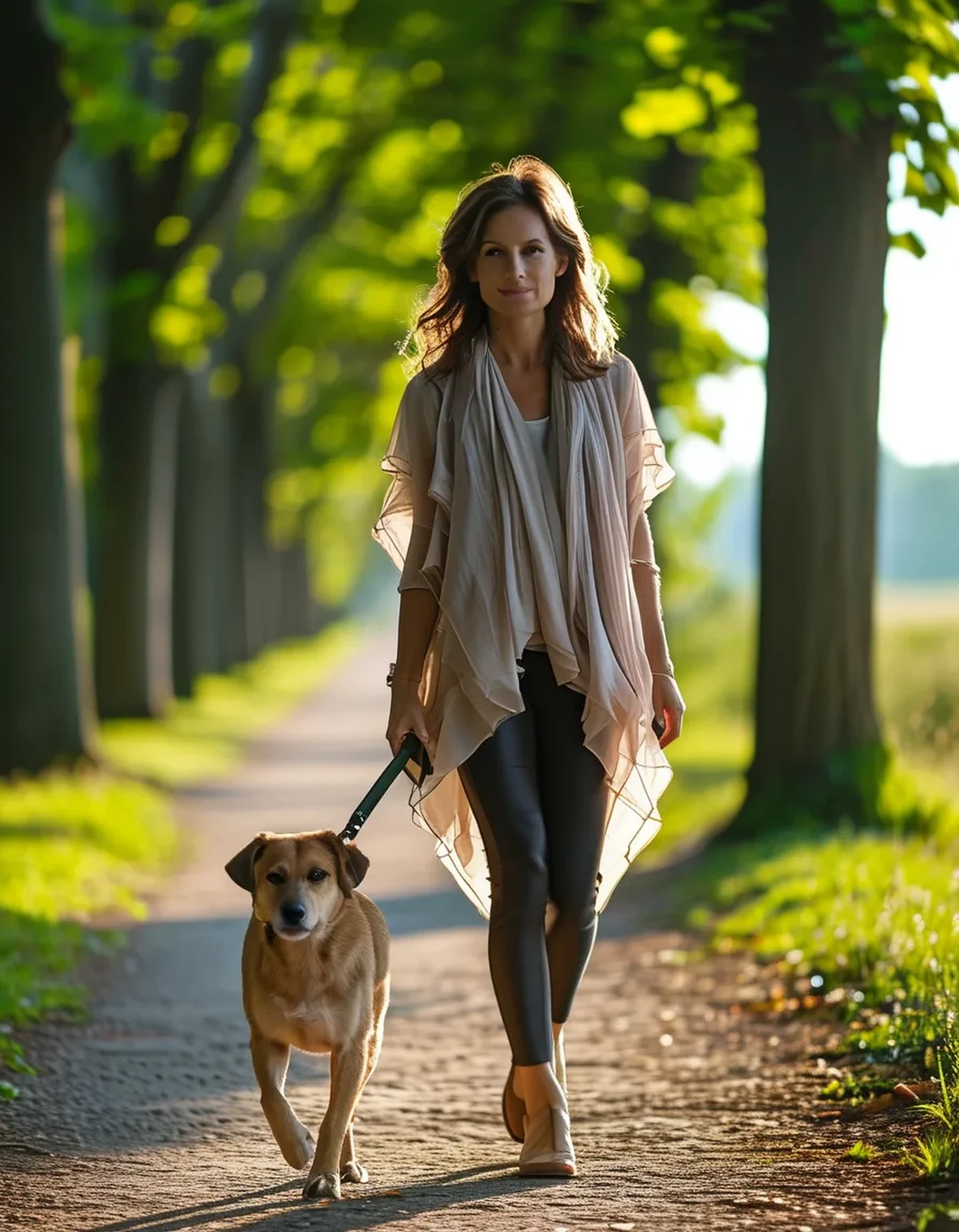
Base: a fitted long-sleeve technical top. Not cotton. Cotton holds the moisture from both dew and your own effort and stays cold. A thin technical long sleeve is comfortable across the entire temperature range you will meet.
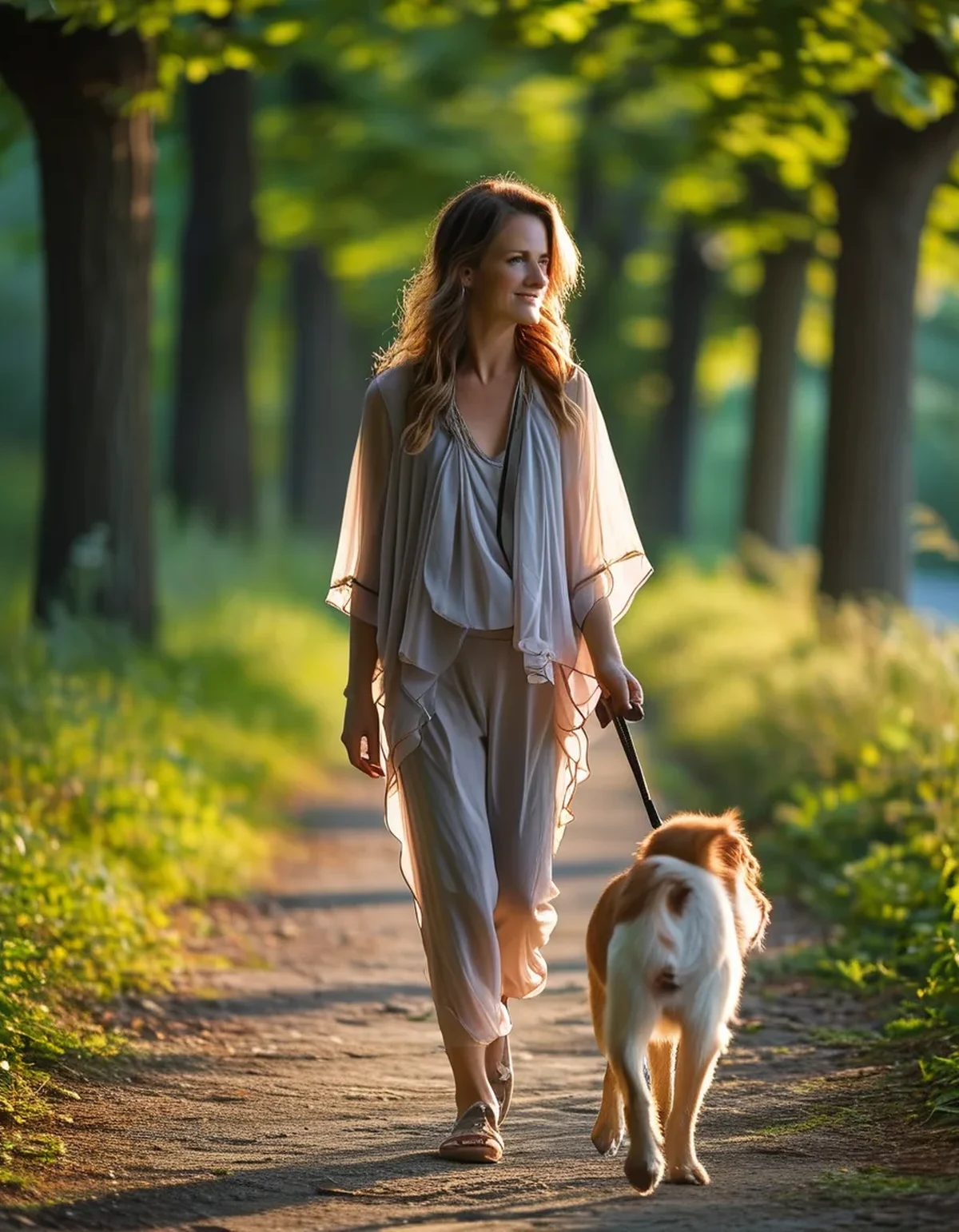
Mid: a light zip or a fine knit that ties at the waist. The critical property is that it can be removed and worn around the waist without looking absurd or getting in the way of a leash. This is the layer doing the actual temperature management.
Shell: only if rain is likely. A packable shell that lives permanently in the bag or pocket. Carrying it every day is a tax; having it on the one wet morning is worth it.
Bottoms: full length, always. This is where dew management happens. A cropped legging leaves exactly the strip of ankle that gets wettest. A full-length technical legging or a light jogger keeps the wet at shoe level.
The order matters because you will be removing layers one-handed, with a leash in the other. Anything that requires two hands and thirty seconds gets kept on until you are too warm.
What do people get wrong about the footwear?
They keep wearing summer shoes for about a month too long.
Tread matters again. Wet grass, damp leaves, and mud return in late August, and a worn-smooth running shoe on wet grass on a slope with a dog pulling is a genuine slip risk. Look at your outsole honestly.
Mesh uppers wet through instantly. The breathable summer trainer that was perfect in July soaks in the first hundred metres of dewy grass and stays wet for the whole walk. A shoe with a less open upper is a meaningful upgrade for this specific season.
Socks become a real decision. A no-show sock plus dew equals a wet sock inside a wet shoe. A proper crew or ankle sock in a technical fabric, not cotton, changes the walk completely.
Waterproof is not automatically better. A fully waterproof shoe that lets water in over the collar holds it there. For dewy grass rather than puddles, a quick-drying shoe often beats a waterproof one.
Rotate two pairs. Once the dew starts, a single pair never fully dries between morning walks, and a damp shoe on the second day is where blisters and smell start.
Myth vs Fact: cool morning dog walks
Myth: If it is going to be warm later, dress for the warm. Fact: You dress for the walk, and the walk is at 7am. Dressing for the afternoon means being cold for the entire actual activity in exchange for convenience later.
Myth: A big jacket handles it. Fact: One heavy layer gives you two states — too hot and too cold. Three light layers give you four. The number of layers matters more than the total warmth.
Myth: Dogs do not need consideration in mild weather. Fact: Short-coated and senior dogs feel a 60°F damp morning more than owners expect, and a dog that stands still while you talk to a neighbour cools fast. Also worth checking: cooler mornings mean more wildlife activity and more distracted dogs.
Myth: High-vis is only for winter. Fact: The visibility problem starts in late August, when the light goes but nobody has changed their habits yet. A reflective detail on the leash and on you is worth adding now rather than in November.
Myth: Pockets are a minor detail. Fact: Waste bags, phone, treats, keys, and possibly a removed layer. Pocket capacity is the single most consequential functional feature of a dog-walking outfit and it is the one most activewear gets wrong.
FAQ: Cool Morning Walk Questions, Answered
How do I stop my leggings getting soaked at the ankle?
Full length rather than cropped, a slightly tapered ankle rather than a flare, and a fabric with some water resistance. Tucking into a sock looks worse and works better on the wettest mornings.
Is it worth having a dedicated dog walking outfit?
Yes, and it is one of the few cases where a dedicated set genuinely pays off. It gets muddy, it gets pulled, and it needs pockets that no other outfit needs. Keeping it by the door also removes the friction on the mornings you nearly did not go.
When should I switch to proper autumn kit?
When the morning low sits consistently below about 55°F, which in most of the northern US means late September. Before that, the three-layer late-summer system handles everything.
TL;DR:
- Late August mornings run about twenty degrees below the afternoon, and dew is a bigger problem than temperature.
- Three light layers beat one warm one — base, waist-tieable mid, and a shell only when rain is likely.
- Full-length bottoms, always; cropped leaves exactly the strip of ankle the dew gets.
- Swap the mesh summer trainer for something with tread and a less open upper, and rotate two pairs.
- Add a reflective detail now rather than in November — the light goes before anyone changes habits.
The walk that gets skipped is usually the one where the outfit decision was annoying. Keep the set by the door and the decision disappears.
See It in Motion
Seen here: High Waist Yoga Leggings with Side Pockets — shop it on bubblelime.com
Keep Reading
This article is for general informational and styling purposes only. Fit, sizing, and product availability may vary.