What to Wear to a Puppy Training Class - and Why It Matters More Than You Think

Quick Answer: Wear something you can kneel and crouch in repeatedly, with a waistband that holds a treat pouch without sliding, in a fabric that does not show paw prints or hold fur. Avoid loose sleeves, dangling drawcords, long necklaces, and anything you would be upset about a puppy tearing. Flat, closed, grippy shoes matter most - training halls have slippery floors and you will be moving backwards.
The first class, everyone arrives dressed as if going to a meeting about a dog rather than to a floor covered in dogs. By week two, everyone has worked it out. Here is week two’s information in week one.
What does the class actually ask your body to do?
More than people expect, and the movements are specific.
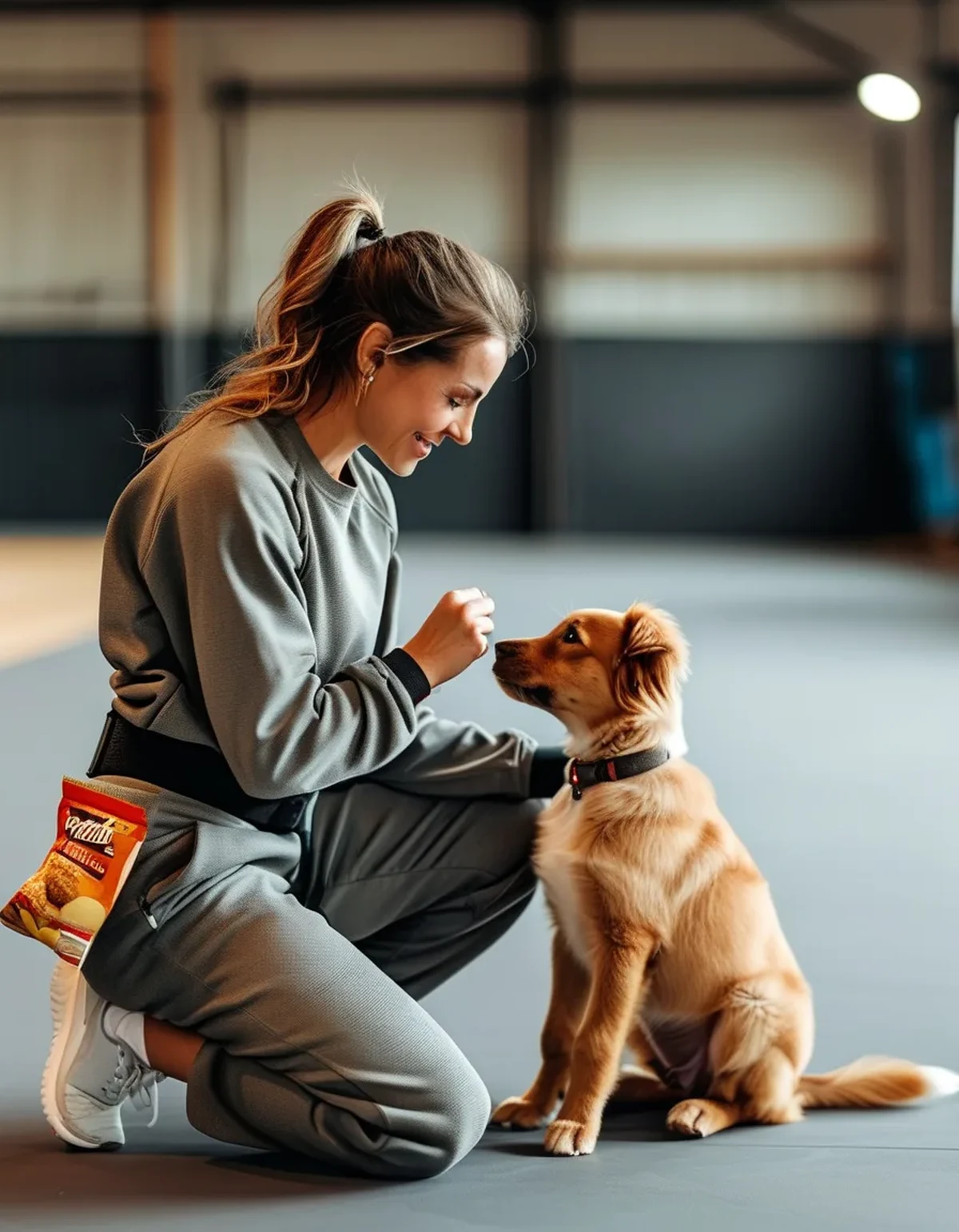
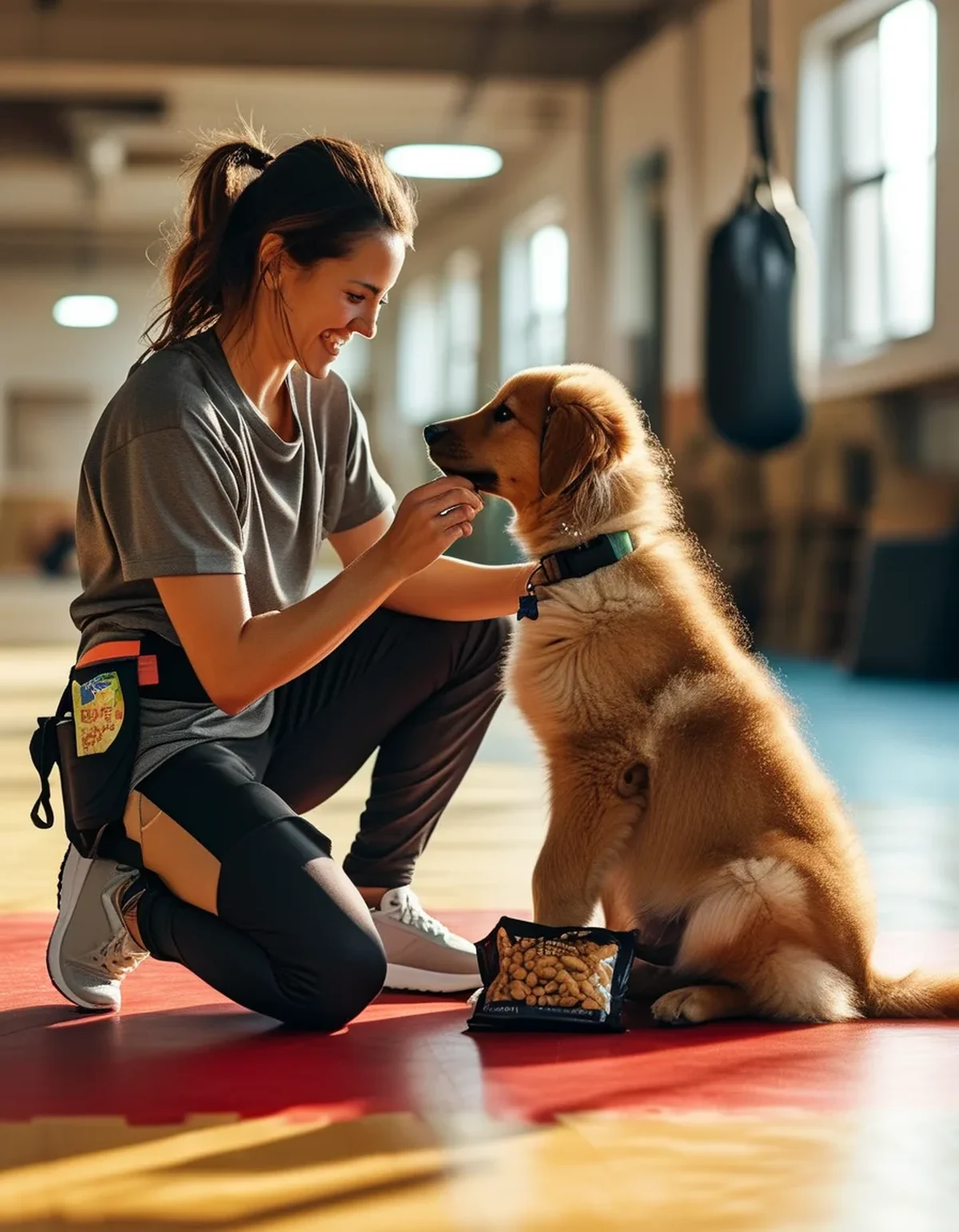
Repeated crouching and kneeling. Rewarding a small dog means delivering treats at their level, which means going down and up dozens of times an hour. Anything that restricts the knee or rides down at the waist when you squat becomes a continuous problem.
Reaching into a pouch a hundred times. Treat delivery has to be fast, because the reward window for a dog is about a second. Any friction in that motion - a pouch that swings, a pocket that is hard to reach, a sleeve that catches - genuinely degrades your training.
Walking backwards. A large amount of early training involves reversing while the dog follows. This is where footwear matters, and where people in smooth-soled shoes discover the floor is polished.
Standing still for long periods while the instructor demonstrates, on a hard floor.
Being jumped on, mouthed, and stood on. Puppies do all three, and tights, thin knits, and anything with loose threads do not survive it.
And the temperature swings. Training halls in late August range from stifling to aggressively air-conditioned, and you will be moving in bursts and then standing still, which is exactly the pattern that makes a single layer wrong all evening.
What to wear, specifically
From the ground up.
Shoes - the most important item. Flat, closed-toe, with a grippy rubber sole. Trainers with a proper outsole rather than fashion sneakers with smooth soles. Training halls often have polished or rubber-matted floors and you will be stepping backwards without looking. Closed toe is non-negotiable around excited puppies.
Bottoms. Full-length leggings or joggers in a mid-weight fabric with real stretch and a wide, secure waistband. The waistband is doing two jobs - staying put through repeated squats, and anchoring a treat pouch. A drawcord helps. Avoid:
- Anything that requires adjustment when you stand up.
- Very light colours, which show floor dirt and paw prints immediately.
- Thin fabric that goes translucent when you crouch.
- Shorts, unless you are relaxed about being scratched on the shins.
Top. Fitted or semi-fitted, short or three-quarter sleeve. Loose sleeves catch on leads and dangle into treat pouches. A slightly longer cut that stays down when you reach up is worth having.
Layer. A light zip-through you can remove without pulling anything over your head - because you will be holding a lead - handles the hall temperature problem.
And leave off: long necklaces, hoop earrings, dangling drawcords, scarves, and rings with settings that catch. Every one of these is an invitation to a puppy, and all of them are more interesting than the treat in your hand.
5 Mistakes People Make at Their First Class
1. Wearing pockets instead of a treat pouch. Pockets are slow, and slow rewards teach the wrong thing because the dog cannot connect a treat two seconds late with what they just did. A proper pouch on the waistband with a wide opening is the single most useful piece of kit in the room. Get one before the first class, not after the third.
2. Underestimating the fabric test. Puppies jump, and their claws catch loose knits, snag thin fabric, and pull threads. Wear something with a smooth, dense surface. Ribbed knits and loose weaves come home damaged.
3. Dressing for the hall, not the floor. You will spend a meaningful part of the class kneeling on a hard, possibly damp, definitely dirty floor. Dark, mid-weight fabric that you do not mind washing hot is the correct choice, and knee comfort matters more than you would guess in advance.
4. Wearing anything that shows fur. Black leggings and a golden retriever are a poor combination, and so are light fabrics with a dark-coated dog. A mid-tone marl or heather picks up fur far less visibly than either extreme, which is why it quietly dominates training halls.
5. Forgetting that you will smell like liver. High-value training treats are strongly smelling by design. Wear something that goes straight into the wash, and keep the pouch out of the good coat pocket on the way home.
How does the outfit affect the actual training?
More directly than it sounds, in four ways.
Reward speed. The window for a dog to associate a reward with a behaviour is very short. Any delay - fumbling a zip, reaching into a deep pocket, a pouch that has swung round behind you - reduces the clarity of the information you are giving. A pouch positioned at the front of your hip on the same side as your dominant hand removes most of that delay.
Your movement quality. Training involves precise body positioning - where you stand, which way you turn, how you step back. Clothing that restricts a squat or a lunge subtly changes how you move, and dogs read body position with remarkable sensitivity. Restricted movement makes your cues less consistent.
Your attention. Every time you adjust a waistband, push up a sleeve, or move a necklace out of a puppy’s mouth, your attention leaves the dog. In a one-hour class, that adds up to a meaningful fraction of the session.
Your own comfort with getting down. People in unsuitable clothing avoid kneeling. Avoiding kneeling means rewarding from standing, which for a small puppy means the reward comes from above and the dog jumps up to meet it - which is how jumping up gets accidentally trained in a class about not jumping up. This is the most consequential clothing effect in the room and almost nobody names it.
One more practical note: bring a small towel or a folded mat if the hall floor is hard. Ten minutes of kneeling on concrete is genuinely uncomfortable, and comfortable people train better.
FAQ: Training Class Outfit Questions, Answered
What should I wear to a dog training class?
Flat grippy closed-toe shoes, mid-weight leggings or joggers with a secure wide waistband, a fitted top with sleeves that do not dangle, and a light zip layer. Add a treat pouch on the waistband at your dominant-hand hip.
Do I really need a treat pouch?
Yes, more than any other item. Reward timing matters enormously in early training, and pockets are slow enough to blur the association between the behaviour and the treat. A pouch with a wide opening at the front of your hip is the fix.
What should I avoid wearing around puppies?
Long necklaces, scarves, dangling drawcords, loose knits, tights, open-toe shoes, and anything you would be upset to have snagged. Puppies mouth and jump, and anything that moves is more interesting than what you are holding.
What colour clothing hides dog fur best?
Mid-tone marls and heathers. Solid black shows light fur and solid light colours show dark fur, while a mixed mid-tone breaks up both. It also hides paw prints from a floor better than either extreme.
TL;DR:
- Flat grippy closed shoes first - you will be walking backwards on a slippery floor.
- Wide secure waistband so a treat pouch stays put through repeated squats.
- Fitted sleeves, no dangling anything, dense smooth fabric that survives claws.
- Mid-tone marl hides fur and floor dirt better than black or light.
- Clothing you can kneel in matters most, because rewarding from standing accidentally teaches jumping.
It is not a fashion question. It is whether you can deliver a treat in under a second while kneeling on a cold floor, which turns out to be most of what the first six weeks are.
See It in Motion
Seen here: Yoga Jogger Sweatpants with Pockets — shop it on bubblelime.com
Keep Reading
This article is for general informational and styling purposes only. Fit, sizing, and product availability may vary.