Dog Walk Layers for Mornings That Start Cold and End Warm

Quick Answer: Early autumn dog walks can swing 10 to 15 degrees between leaving and returning, and you cannot put a jacket in a pocket while holding a leash. Build around a fitted base you are happy to be seen in, one packable mid layer, and a vest rather than a full jacket - a vest keeps the core warm without the sleeves you will want to remove. Everything should be carryable one-handed or wearable around the waist.
The problem is not warmth. It is what to do with the layer once you take it off.
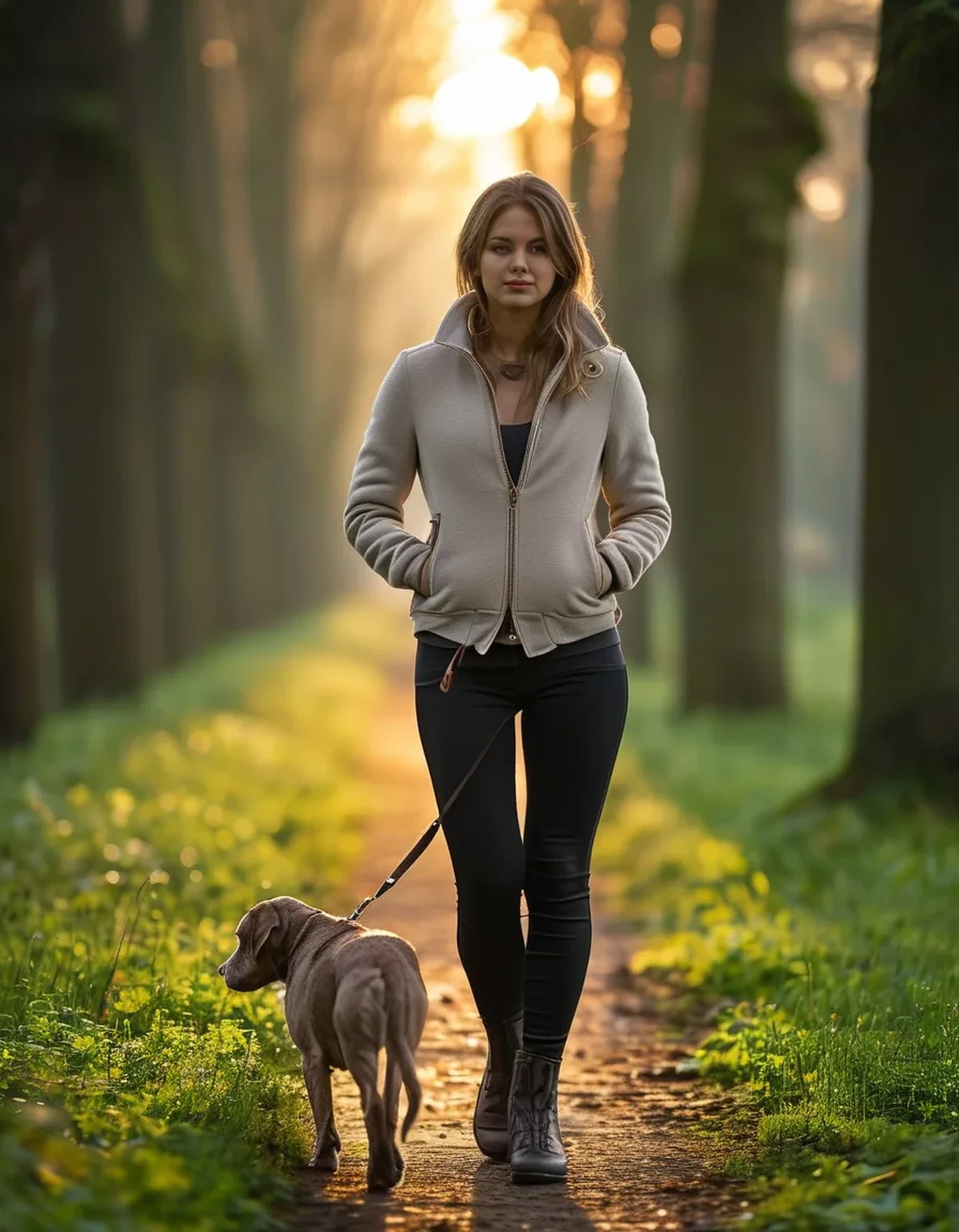
Why is the dog walk version of layering different?
Because both of your hands are already committed.
On a normal walk you can carry a jacket, adjust a bag, put something in a pocket. On a dog walk you are managing a leash in one hand and, frequently, a bag or a treat pouch in the other. A dog that pulls means the leash hand is not really available.
Which means any layer you remove has to go somewhere without hands - around your waist, into a pocket, or into a small bag you are already wearing.
That single constraint eliminates most of what people wear. A structured jacket does not tie around the waist neatly. A puffer does not fold small. A bulky sweatshirt tied at the waist swings and catches on the leash.
The second difference is effort profile. A dog walk is not steady-state exercise. You stop, you wait, you walk fast, you stand still for two minutes while your dog investigates something. Your heat production swings constantly, which means you overheat and then chill within the same twenty minutes.
Steady-state layering advice - dress for ten minutes into the activity - does not work when the activity has no steady state.
What is the actual layer stack?
Three pieces, and the middle one is the interesting choice.
Base: a fitted long sleeve you would wear on its own. This is doing double duty - it is your warm layer at the start and your entire outfit by the end. A ribbed or brushed knit in a solid color works better than a technical running top, because you will be seen in it around the neighborhood.
Mid: a vest, not a jacket. This is the single most useful swap for transitional weather. A vest keeps the core warm - which is most of what perceived warmth is - while leaving the arms free to dump heat. Because arms are where you regulate temperature most, a vest self-regulates in a way a jacket does not, and you often do not need to remove it at all.
Outer, only if genuinely cold or wet: a packable shell. Something that stuffs into its own pocket and clips to a belt loop or a bag. Not a jacket you have to carry.
Bottoms: full length. Ankles are the fastest place to feel cold at 7am and the least likely to overheat by 8. Cropped lengths that were perfect in August become the reason the whole walk feels cold.
Total: three garments, none of which need to be carried in your hands.
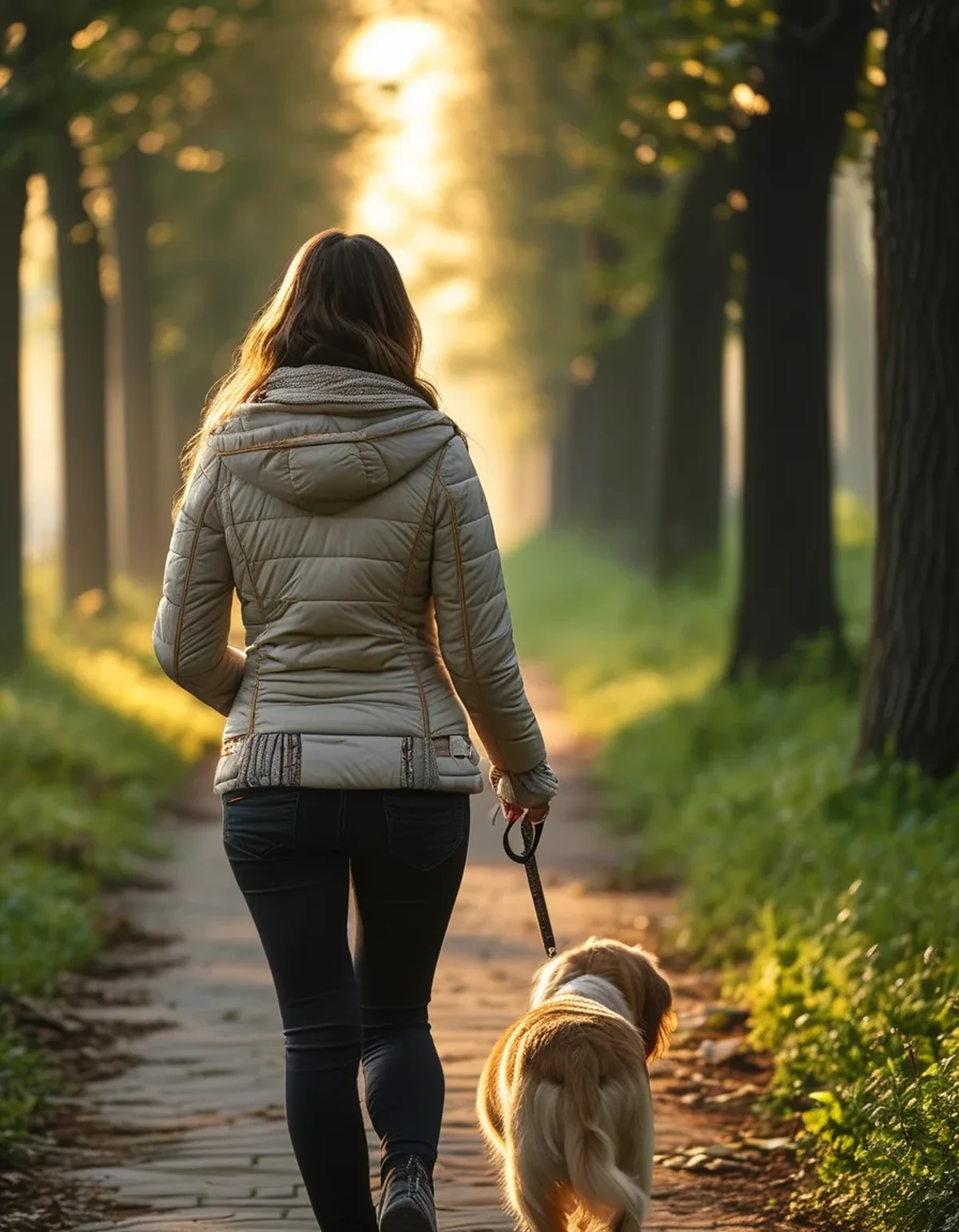
What Nobody Tells You About Standing Still
The cold on a morning dog walk is almost entirely from the stationary parts.
Walking generates roughly three to four times your resting heat output. Standing still generates almost none. So a walk that is 70 percent movement and 30 percent standing has, in effect, two different temperature requirements.
And the standing parts happen at the worst moments - after you have been walking, when you are slightly damp from your own heat production. Evaporative cooling from damp skin or a damp base layer is dramatic. This is the mechanism behind that specific chill that arrives about ten minutes into a walk on a cool morning, and it has nothing to do with the air temperature dropping.
The implications are practical:
- A base layer that manages moisture matters more than a warm outer layer. Cotton holds moisture against the skin and is the main cause of this problem. Merino or a technical knit does not.
- A hood or a light neck layer matters disproportionately, because the neck and head lose heat fast and are exposed when standing.
- Keep moving during the stops where you can - walking small circles rather than standing.
Once you know that the chill comes from your own moisture, the fix is a fabric choice rather than a thicker coat, which is a much easier problem to solve.
Where does everything actually go?
This is the part most outfit advice skips, and it determines whether the system works.
Pockets that close. A phone in an open pocket while bending to pick up after a dog is how phones end up in wet grass. Zip pockets on the bottoms are worth prioritizing over almost any other feature.
A small cross-body or belt bag. This is the highest-value accessory for dog walking specifically. It holds the phone, keys, treats, and bags, and it leaves both hands available. A cross-body worn to the back does not swing into the leash.
Waste bags on the leash, not in a pocket. A dispenser that clips to the leash means you are never digging one-handed.
Treats somewhere reachable without looking. A pocket you can open one-handed, on the side of your dominant hand.
The vest, when removed, ties at the waist - which works because a vest has no sleeves and lies flatter than a jacket. Or it goes over the cross-body strap.
One genuinely useful test: get fully dressed, put the leash in your usual hand, and try to take out your phone, open a waste bag, and remove your mid layer. If any of those needs two hands or a stop, the setup needs adjusting before a real walk finds out for you.
FAQ: Transitional Dog Walk Outfit Questions
Is a vest really warm enough?
For most people down to around 45 to 50 degrees Fahrenheit while walking, yes - core insulation drives most of perceived warmth. Below that you want sleeves, but at that point you are less likely to overheat and remove them.
What about reflective details this time of year?
Increasingly important. Morning and evening walks shift into low light quickly through September and October. Reflective piping on a vest or bottoms is worth prioritizing now rather than in November, because the change catches people out by a few weeks.
How do I stop the tied-around-waist layer from swinging into the leash?
Tie it low and to the side opposite your leash hand, and keep it to a thin layer. A bulky sweatshirt tied at the waist will interfere no matter how you tie it - that is a good argument for the packable shell over the sweatshirt.
TL;DR:
- Both hands are occupied on a dog walk, so any removed layer must go around the waist, in a pocket, or in a bag.
- Build around a fitted base you would wear alone, a vest rather than a jacket, and a packable shell only when needed.
- A vest self-regulates because the arms stay free to dump heat, so you often never take it off.
- The chill comes from your own moisture during standing stops - fix it with a non-cotton base layer, not a thicker coat.
- Full-length bottoms, zip pockets, a cross-body bag, and bags clipped to the leash make the whole thing one-handed.
Add reflective detail now rather than in November - low-light walks arrive faster than most people expect.
Keep Reading
This article is for general informational and styling purposes only. Fit, sizing, and product availability may vary.